
Homi J. Bhabha
Nuclear physicist and father of India’s nuclear programme
- Lived
- 56 yrs
- 1909 – 1966
- Works listed
- 0
- Career highlights
- Honours
- 2
- Most recent 1954
- Profile views
- 0
- 0 followers
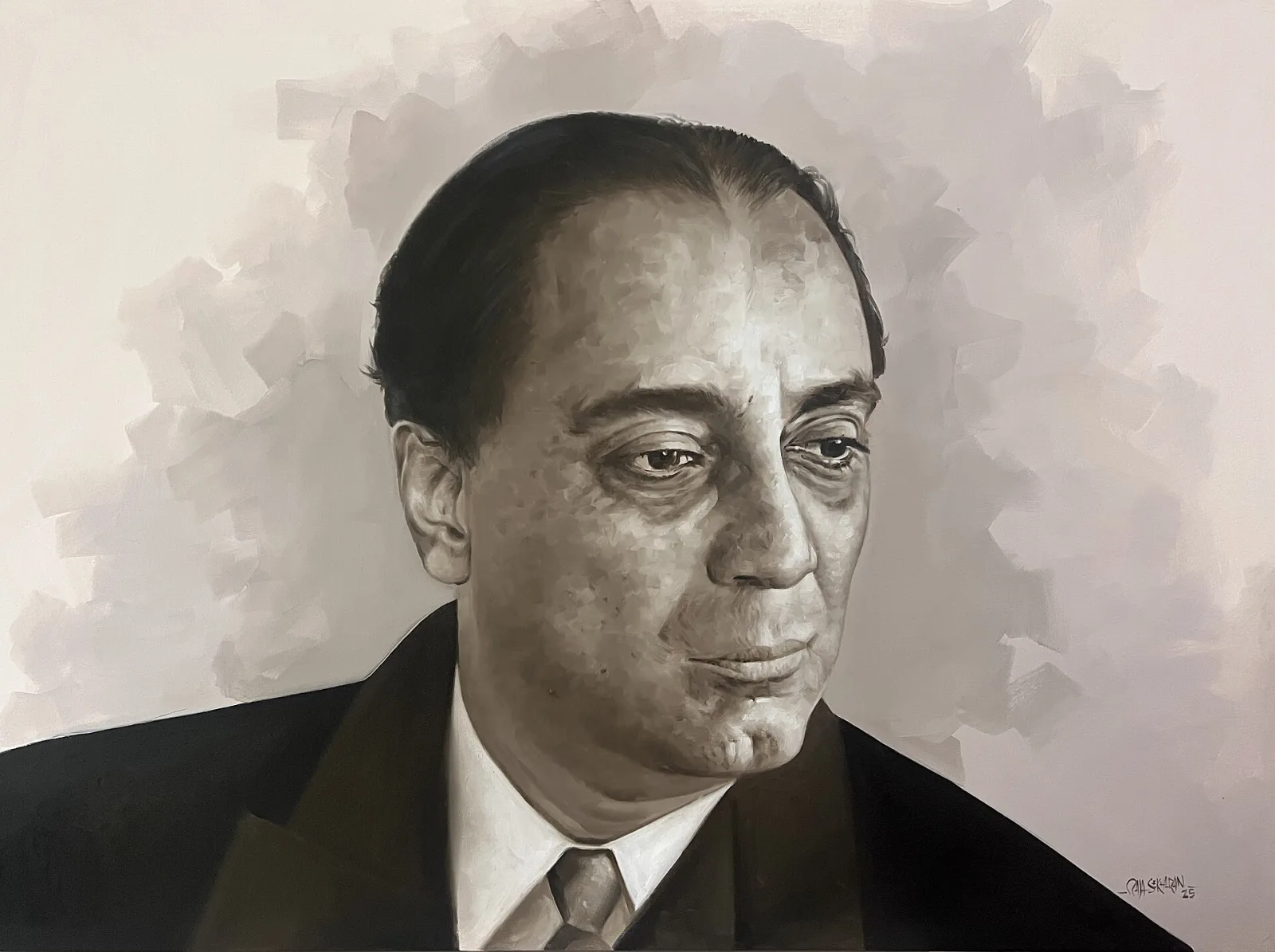
Homi J. Bhabha was a nuclear physicist who founded the Tata Institute of Fundamental Research and led India’s atomic energy programme as first chairman of the Atomic Energy Commission. The Bhabha Atomic Research Centre is named after him.
Biography
Physicist
Born into a prominent Parsi family, Bhabha studied engineering and then theoretical physics at Gonville and Caius College, Cambridge. His work on electron–positron scattering (Bhabha scattering, 1935) and, with Walter Heitler, on cosmic-ray showers made him one of the leading young physicists of his time. He was elected a Fellow of the Royal Society in 1941.
Building Indian science
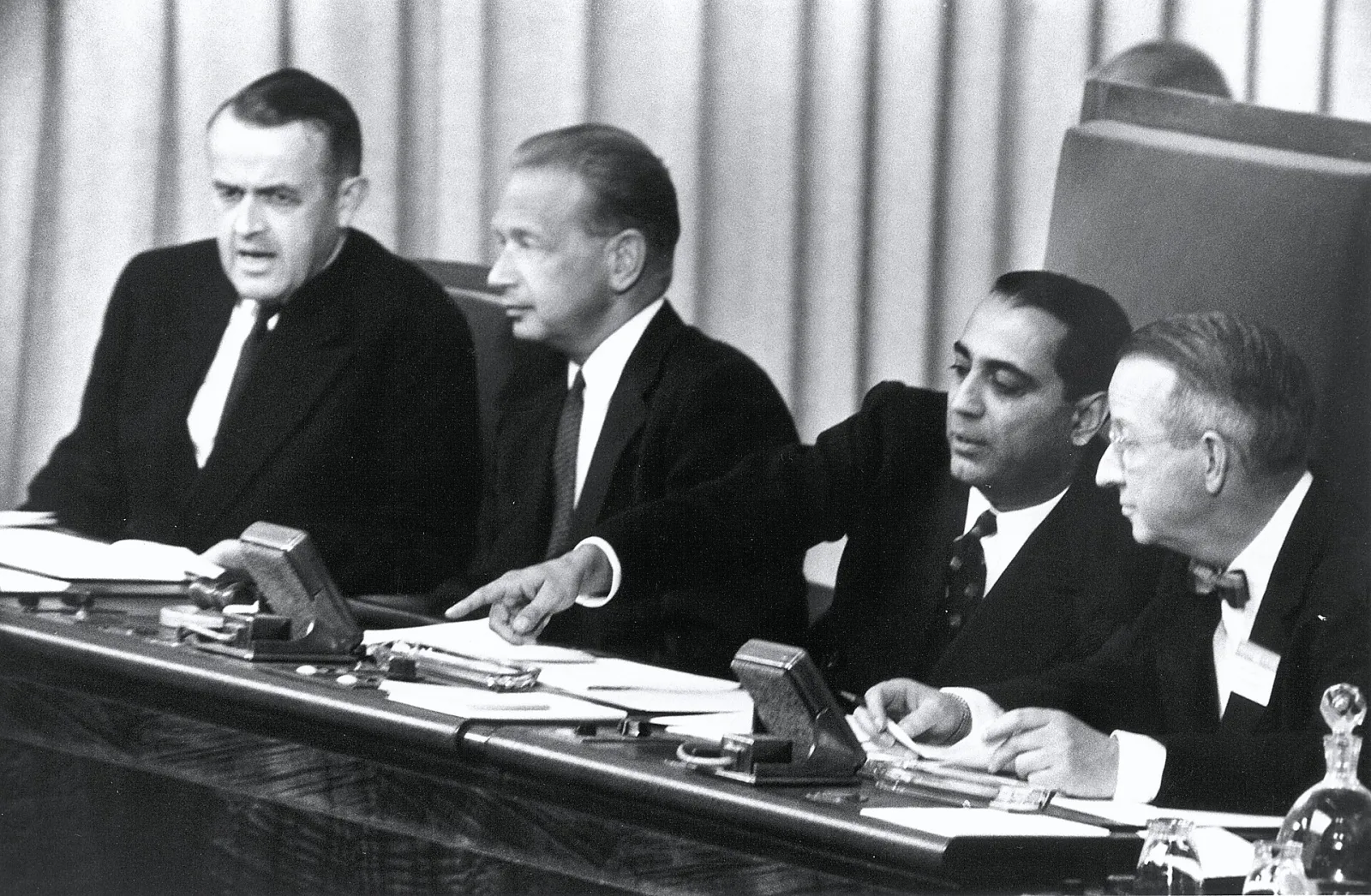
Stranded in India by the Second World War, he worked at the Indian Institute of Science and in 1945, with support from the Tata trusts, founded the Tata Institute of Fundamental Research in Bombay. He became the first chairman of the Atomic Energy Commission in 1948, set up the Atomic Energy Establishment at Trombay, and designed India’s three-stage nuclear power programme based on its thorium reserves. In 1955 he presided over the first UN conference on the peaceful uses of atomic energy.
Artist and patron
Bhabha was a talented painter and musician who designed the gardens and art collection of TIFR and Trombay. He was an early patron of Indian modernist painters such as M. F. Husain and S. H. Raza, and the TIFR art collection he began is now one of the most important in India.
Death
Bhabha died on 24 January 1966 when Air India Flight 101 crashed on Mont Blanc. The Trombay establishment was renamed the Bhabha Atomic Research Centre in 1967.
Legacy
Bhabha’s vision of nuclear self-reliance — built on thorium, of which India has large reserves — still shapes India’s atomic energy programme. The country’s first research reactor, Apsara, went critical at Trombay in 1956, the first in Asia outside the Soviet Union. He was nominated several times for the Nobel Prize in Physics.
Timeline
-
1909
Born in Bombay (Mumbai), Bombay Presidency
-
1935
Bhabha scattering
-
1939
Joins the Indian Institute of Science
Under C. V. Raman.
-
1941
Fellow of the Royal Society
-
1945
Founds TIFR
-
1948
Chairman, Atomic Energy Commission
-
1954
Padma Bhushan; Trombay establishment opens
-
1955
President, UN conference on peaceful uses of atomic energy
Geneva.
-
1956
Apsara, India’s first research reactor, goes critical
-
1966
Dies in the Mont Blanc air crash
-
1967
Trombay establishment renamed BARC in his honour
-
1966
Died, aged 56
Awards and honours
-
Fellow of the Royal Society
1941
-
Padma Bhushan
1954
Did you know?
-
1
He was a skilled painter and collector of modern Indian art.
-
2
Apsara, built under him, was Asia’s first research reactor outside the Soviet Union.
-
3
He was nominated for the Nobel Prize in Physics several times.
Gallery

Connections
Related people
-
 C. V. Raman
Science · Physicist; Nobel laureate who discovered the Raman effect
Colleague at the Indian Institute of Science
-
 Vikram Sarabhai
Science · Physicist and father of India’s space programme
Successor as head of the atomic energy programme
-
 Jawaharlal Nehru
Politics & Leadership · First Prime Minister of India (1947–1964)
Close ally in building India’s science institutions
-
 M. F. Husain
Art & Design · Painter and member of the Progressive Artists’ Group
Early patron
-
 S. H. Raza
Art & Design · Painter known for the bindu and a founder of the Progressive Artists’ Group
Early patron
Frequently asked
Who is Homi J. Bhabha?
Homi J. Bhabha was a nuclear physicist who founded the Tata Institute of Fundamental Research and led India’s atomic energy programme as first chairman of the Atomic Energy Commission. The Bhabha Atomic Research Centre is named after him.
When did Homi J. Bhabha die?
Homi J. Bhabha died on 24 January 1966 at the age of 56.
Where is Homi J. Bhabha from?
Homi J. Bhabha was born in Bombay (Mumbai), Bombay Presidency.
What is Homi J. Bhabha known for?
Homi J. Bhabha is best known for Founding TIFR and the Atomic Energy Establishment (BARC); Bhabha scattering.
What awards has Homi J. Bhabha received?
Notable honours include Fellow of the Royal Society (1941), Padma Bhushan (1954).
References
- Homi J. Bhabha — Wikipedia. Wikipedia. Retrieved 26 October 2026.
- Homi J. Bhabha — Britannica. Encyclopaedia Britannica. Retrieved 26 October 2026.
- Homi J. Bhabha — Hindi Wikipedia. Wikipedia (Hindi). Retrieved 26 October 2026.
- Homi J. Bhabha (Q325611) — structured data. Wikidata. Retrieved 26 October 2026.
External links
About this profile
- Researched by the TrackFame editors; reviewed by Sanjay Sokal
- First published 26 October 2026
- Last updated
Cite this page
“Homi J. Bhabha.” TrackFame, last updated 26 October 2026. https://trackfame.com/person/homi-j-bhabha
Discussion 0
Sign in or create an account to join the discussion.
No comments yet — be the first.
More in Science
Science
C. V. Raman
Physicist; Nobel laureate who discovered the Raman effect
1888 – 1970
 Science
Srinivasa Ramanujan
Self-taught mathematician whose results still shape number theory
1887 – 1920
 Science
Satyendra Nath Bose
Physicist after whom bosons are named
1894 – 1974
 Science
Jagadish Chandra Bose
Physicist and plant biologist; pioneer of radio and microwave research
1858 – 1937
Science
Vikram Sarabhai
Physicist and father of India’s space programme
1919 – 1971
 Science
A. P. J. Abdul Kalam
Aerospace scientist and 11th President of India
1931 – 2015