
Jawaharlal Nehru
First Prime Minister of India (1947–1964)
- Lived
- 74 yrs
- 1889 – 1964
- Works listed
- 3
- Book, Autobiography
- Honours
- 1
- Most recent 1955
- Profile views
- 0
- 0 followers
Jawaharlal Nehru was a leading figure of the independence movement and India’s first and longest-serving Prime Minister. He shaped the young republic’s parliamentary democracy, secular constitution, planned economy and non-aligned foreign policy.
Biography
Early life
Nehru was the son of Motilal Nehru, a prominent lawyer and Congress leader. He was educated at Harrow School and Trinity College, Cambridge, and trained as a barrister at the Inner Temple before returning to India in 1912.
Drawn into politics by Mahatma Gandhi, he joined the Non-Cooperation Movement and spent a total of about nine years in British prisons, where he wrote several of his best-known books.
Independence movement
As president of the Indian National Congress at its 1929 Lahore session, Nehru presided over the resolution demanding Purna Swaraj — complete independence. He became Gandhi’s chosen political heir and the leading voice of the Congress’s socialist and internationalist wing.
On the night of 14–15 August 1947 he addressed the Constituent Assembly with the “Tryst with Destiny” speech as India became independent.
Prime Minister
As Prime Minister from 1947 until his death in 1964, Nehru led the country through partition, the integration of the states and the first general elections in 1951–52. His governments launched Five-Year Plans, built heavy industry and dams, and founded institutions such as the Indian Institutes of Technology and AIIMS.
Abroad he championed decolonisation and, with leaders of Egypt, Yugoslavia, Indonesia and Ghana, helped found the Non-Aligned Movement. The 1962 border war with China was the major setback of his final years.
Ideas
Nehru’s political philosophy combined parliamentary democracy, secularism, a mixed economy with a strong public sector, scientific temper and non-alignment in foreign policy. He insisted on universal adult suffrage from India’s first election and on equal citizenship regardless of religion, and he believed planning and heavy industry — which he called the “temples of modern India” — would end poverty.
Critics and debates
Nehru’s legacy is debated. Admirers credit him with keeping India democratic and united in its fragile early years and building its scientific and educational institutions. Critics fault his handling of Kashmir and China, the slow growth of the planned economy and the dominance of his family in the Congress after him.
Writer and legacy
Nehru wrote widely read histories from prison, including Glimpses of World History, written as letters to his daughter Indira, and The Discovery of India. He was awarded the Bharat Ratna in 1955.
His fondness for children is remembered in India’s Children’s Day, celebrated on his birthday, 14 November. His daughter Indira Gandhi and grandson Rajiv Gandhi both later became Prime Minister.
Timeline
-
1889
Born in Allahabad (Prayagraj), North-Western Provinces
-
1912
Returns to India as a barrister
Begins practising law at the Allahabad High Court.
-
1916
Marries Kamala Kaul
Their only child, Indira, is born the following year.
-
1916
First meets Mahatma Gandhi
Lucknow Congress session.
-
1929
Congress president at Lahore
Presides over the resolution for complete independence.
-
1936
Congress president again
-
1946
Heads the interim government
Vice-president of the Viceroy’s Executive Council.
-
1947
Becomes first Prime Minister
Delivers the “Tryst with Destiny” speech on 14–15 August.
-
1951
First general election
Congress wins a large majority in India’s first nationwide vote.
-
1954
Signs the Panchsheel agreement with China
-
1955
Awarded the Bharat Ratna
India’s highest civilian honour.
-
1956
AIIMS established
By Act of Parliament.
-
1961
Co-founds the Non-Aligned Movement
First summit held in Belgrade.
-
1962
Sino-Indian War
-
1964
Dies in office
Passes away in New Delhi on 27 May.
-
1964
Died, aged 74
Notable works
-
1934
Glimpses of World History Book
A history of the world written as letters from prison to his daughter.
-
1936
An Autobiography (Toward Freedom) Autobiography
Account of his life and the freedom struggle up to the mid-1930s.
-
1946
The Discovery of India Book
Reflections on Indian history and culture, written in Ahmednagar Fort prison.
Awards and honours
-
Bharat Ratna
1955 · India’s highest civilian award.
In their own words
“Long years ago we made a tryst with destiny, and now the time comes when we shall redeem our pledge, not wholly or in full measure, but very substantially. At the stroke of the midnight hour, when the world sleeps, India will awake to life and freedom.”
Did you know?
-
1
He remains India’s longest-serving Prime Minister, at almost 17 years.
-
2
Children’s Day in India is celebrated on his birthday, 14 November.
-
3
Nehru wrote much of his most famous work while imprisoned by the British.
-
4
He called large dams and industrial projects the “temples of modern India”.
-
5
His residence, Teen Murti Bhavan, became a museum and library.
-
6
He wrote 196 letters to his daughter Indira from prison, published as Glimpses of World History.
Gallery
Connections
Related people
-
 Indira Gandhi
Politics & Leadership · Third Prime Minister of India and the only woman to hold the office
Daughter
-
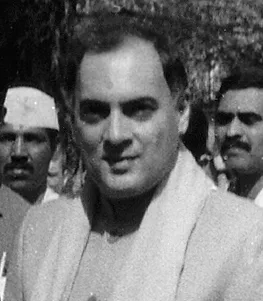 Rajiv Gandhi
Politics & Leadership · Sixth Prime Minister of India (1984–1989)
Grandson
-
 Mahatma Gandhi
Politics & Leadership · Leader of India’s independence movement and pioneer of non-violent resistance
Mentor
-
 Vallabhbhai Patel
Politics & Leadership · First Deputy Prime Minister and Home Minister of India
Deputy Prime Minister
-
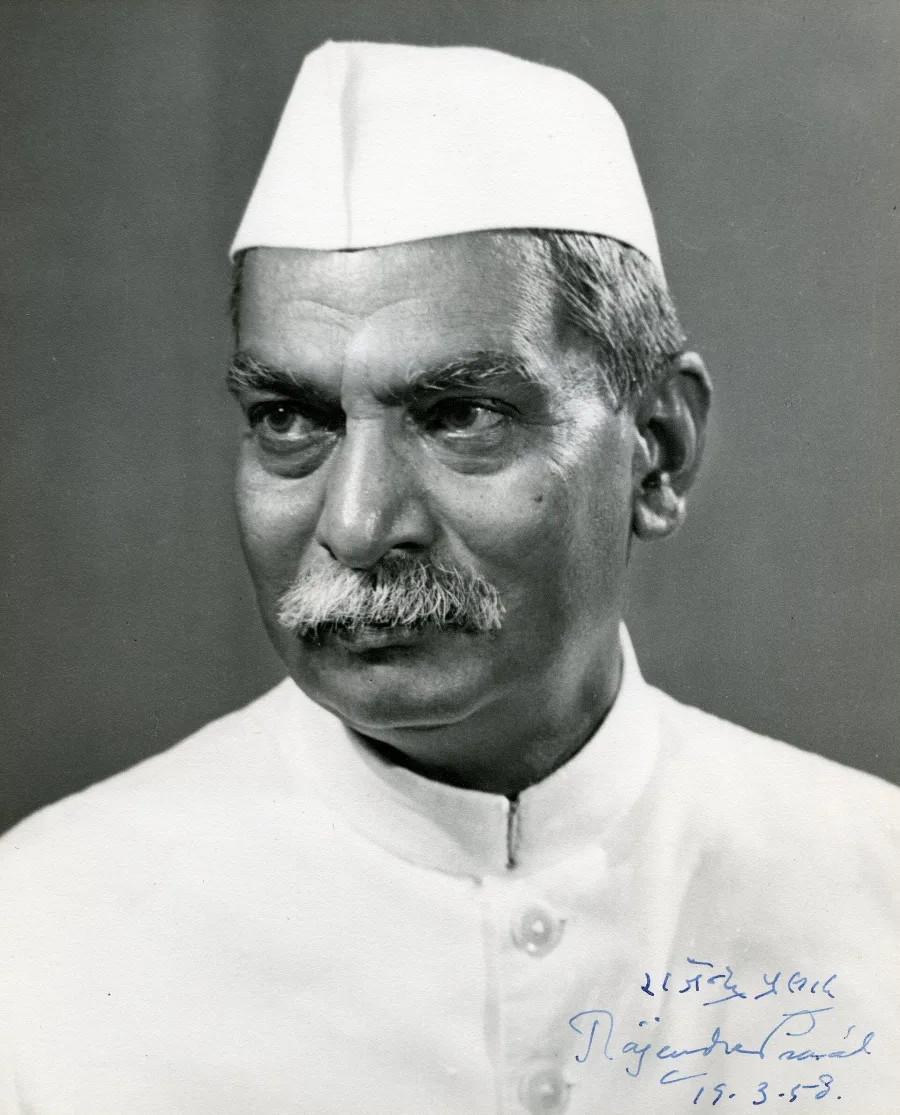 Rajendra Prasad
Politics & Leadership · First President of India (1950–1962)
President during his tenure
Also born on 14 November
Frequently asked
Who is Jawaharlal Nehru?
Jawaharlal Nehru was a leading figure of the independence movement and India’s first and longest-serving Prime Minister. He shaped the young republic’s parliamentary democracy, secular constitution, planned economy and non-aligned foreign policy.
When did Jawaharlal Nehru die?
Jawaharlal Nehru died on 27 May 1964 at the age of 74.
Where is Jawaharlal Nehru from?
Jawaharlal Nehru was born in Allahabad (Prayagraj), North-Western Provinces.
What is Jawaharlal Nehru known for?
Jawaharlal Nehru is best known for Building India’s democratic institutions, the Non-Aligned Movement, “Tryst with Destiny”.
What awards has Jawaharlal Nehru received?
Notable honours include Bharat Ratna (1955).
Who is Jawaharlal Nehru married to?
Spouse: Kamala Nehru (m. 1916; died 1936).
References
- Jawaharlal Nehru — Wikipedia. Wikipedia. Retrieved 26 October 2026.
- Jawaharlal Nehru — Britannica. Encyclopaedia Britannica. Retrieved 26 October 2026.
- Jawaharlal Nehru — IMDb. IMDb. Retrieved 26 October 2026.
- Jawaharlal Nehru — Goodreads author page. Goodreads. Retrieved 26 October 2026.
- Jawaharlal Nehru — Hindi Wikipedia. Wikipedia (Hindi). Retrieved 26 October 2026.
- Jawaharlal Nehru (Q1047) — structured data. Wikidata. Retrieved 26 October 2026.
External links
About this profile
- Researched by the TrackFame editors; reviewed by Sanjay Sokal
- First published 26 October 2026
- Last updated
Cite this page
“Jawaharlal Nehru.” TrackFame, last updated 26 October 2026. https://trackfame.com/person/jawaharlal-nehru
Discussion 0
Sign in or create an account to join the discussion.
No comments yet — be the first.
More in Politics & Leadership
Politics & Leadership
Vallabhbhai Patel
First Deputy Prime Minister and Home Minister of India
1875 – 1950
Politics & Leadership
Rajiv Gandhi
Sixth Prime Minister of India (1984–1989)
1944 – 1991
Politics & Leadership
Indira Gandhi
Third Prime Minister of India and the only woman to hold the office
1917 – 1984
Politics & Leadership
Mahatma Gandhi
Leader of India’s independence movement and pioneer of non-violent resistance
1869 – 1948
 Politics & Leadership
Morarji Desai
Fourth Prime Minister of India and the first from outside the Congress
1896 – 1995
 Politics & Leadership
Lal Bahadur Shastri
Second Prime Minister of India (1964–1966)
1904 – 1966